
Swimming is the best part of summer, but low pH can spoil it fast: stinging eyes, itchy skin and water that slowly damages your pool. The good news is that low pH is easy to fix. Below, the certified team at Clear Tec Pools explains how to raise your pool’s pH safely, step by step.
How to Raise the pH Level of Your Swimming Pool
Keeping pH in the right range (7.2 to 7.8) protects swimmers, your pool surface and your equipment. When pH is too low, the water turns acidic, chlorine gets used up faster and metal parts can corrode. Here is how to bring it back up, the same way our weekly pool maintenance team does it.
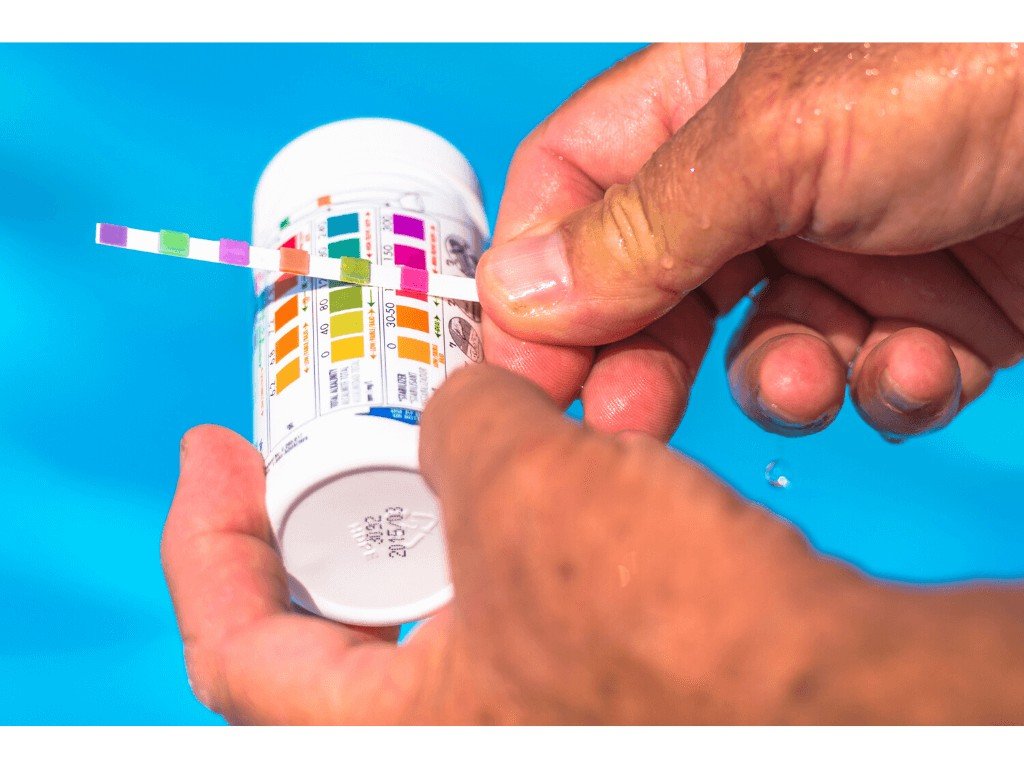
Test the water first with a reliable test kit. If pH is below 7.2, add soda ash (sodium carbonate). Follow the dosage on the label for your pool’s size, and add it slowly in front of the return jets, starting at the deep end. Keep the pump running so the soda ash spreads evenly through the pool. The water may look cloudy for a short time, but it usually clears within a day or two.
Wait a few hours, then test again before adding more. Raising pH in small steps is safer than adding too much at once. If your water keeps drifting out of balance, our pool water balancing service can take it off your hands, or call us today.
Monitor the Alkalinity Level
If pH keeps dropping after you add soda ash, test your total alkalinity. Alkalinity acts as a buffer that holds pH steady. When it is too low, pH swings up and down. Aim for total alkalinity between 80 and 120 ppm.
To raise alkalinity, add baking soda (sodium bicarbonate) with the pump running, let it circulate for about an hour and retest. Baking soda mainly raises alkalinity and only nudges pH up a little, which makes it a gentle first step.
Be careful not to overdo it. Too much baking soda pushes alkalinity too high, and lowering alkalinity is much harder than raising it. Too much chlorine can also upset the balance; see our guide to too much chlorine in your pool.
Checking alkalinity regularly keeps your pH stable, your water clear and your pool surface protected.
Get Help From Pool Experts in Hoschton
Owning a pool means more than cleaning it. The water also needs to stay balanced so it is safe and comfortable to swim in, and that takes regular testing and know-how. That is where we come in. Clear Tec Pools provides professional pool cleaning and water balancing in Hoschton and nearby cities. Our team holds the Certified Pool Operator (CPO) designation, and we keep your pH, alkalinity and chlorine in range all year.
Read more: Pool Cleaning and Maintenance Hacks
Frequently Asked Questions
What happens if the pH of the pool is too low?
Water with low pH is acidic. It can etch grout, plaster, concrete, stone and tile, make vinyl brittle and corrode metal equipment. Dissolved minerals from that damage stay in the water and can cause staining and cloudiness.
How long does it take to adjust the pool’s pH?
Wait two to four hours after adding a pH increaser or decreaser before you retest. Some manufacturers recommend waiting for one full turnover of the pool’s water. Smaller adjustments settle faster.
Does baking soda raise the pH of a pool?
A little. Baking soda mainly raises total alkalinity, which helps keep pH stable. To raise pH directly, use soda ash.
Need help with your pool in Hoschton or nearby? Call Clear Tec Pools at 678-679-0165 or book online.